Home › Guides › Holding warped material flat on a laser bed
Holding warped material flat on a laser bed
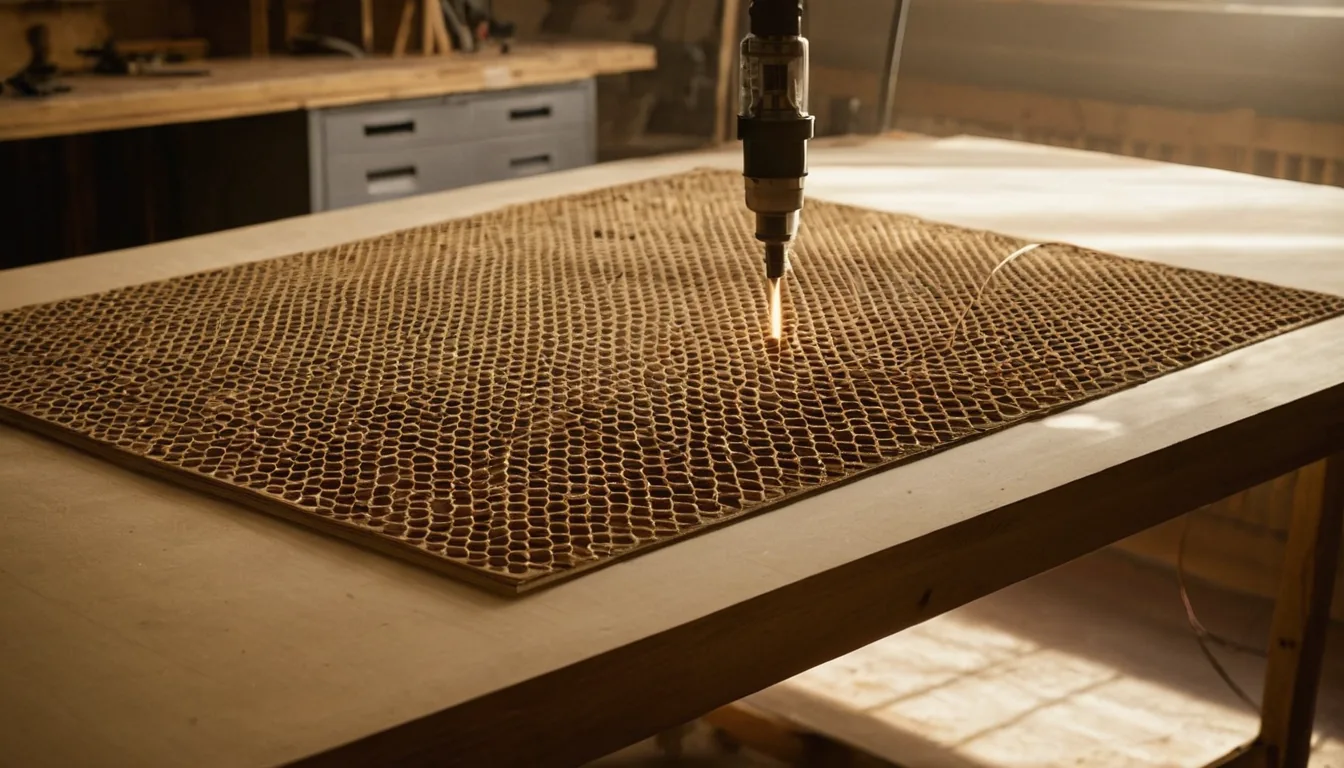
A bowed sheet changes the distance to the lens as the head moves, so engraving fades in some areas and a cut stops halfway through. Flattening the material fixes that more reliably than changing power.
Why flat matters
Focus is a distance. If the surface rises or falls under the head, the beam is sharp in one place and soft in another. Our focus guide gives a 2 mm bow as enough to push the surface out of focus across the sheet. It shows up as engraving that is fine on one side and pale on the other, or as a cut that releases in one corner only (see why a laser will not cut through).
First check that warping really is the cause: a straightedge or a ruler on the sheet shows a gap, and a test grid in two corners shows a difference in depth.
Ways to hold material down
| Method | Good for | Watch out |
|---|---|---|
| Weights on waste areas | Slightly bowed sheets | Keep weights clear of the beam path and the moving head. Reported as causing no distortion of the bed. |
| Pins or screws in the waste area | Honeycomb beds | Reports say pins cope with slight warp but not heavy warp. |
| Magnets | Steel beds or steel plates under the work | Magnets need steel under them. On a honeycomb they can pull the bed out of shape as they flatten the wood, which then shifts focus. |
| Tape at the edges | Thin sheets, paper, veneer | Do not tape where the head passes; tape that lifts can catch fire. |
| Screw it to a flat sacrificial board | Seriously warped wood | Put screws in areas you will discard, away from the cut. |
| Flatten it first | Boards stored badly | Weigh the sheet flat in storage before the job. |
These methods come from maker and vendor guidance (see sources) and results vary by machine and material, so try on scrap.
Plan around the bed you have
- Honeycomb: good support, but flashback marks on the underside. See flashback marks for risers.
- Pin or knife bed: less reflection, but small parts can drop through.
- Autofocus machines take a single reading. Make sure the probe lands on the material and not on a cut-out, as in the focus guide.
When flattening is not enough
If a sheet is too warped to flatten, use shorter jobs on the flat part, cut it to smaller pieces, or choose better stock. Cheap plywood is more prone to bowing and has glue voids (see material problems); laser-grade or Baltic birch is flatter.
Some software offers a height map or Z-adjust over uneven stock. We have no manufacturer source for how well that works on a hobby machine, so check your controller's documentation.
Check the result
After flattening, run the test grid or a ramp test and look at consistency across the whole sheet. If depth now matches corner to corner, you have fixed it. If not, see engraving too light, uneven or blurry.
FAQ
How do I keep warped wood flat for laser cutting?
Weights on waste areas, pins in a honeycomb bed, magnets over a steel plate, or screws through the waste area into a flat sacrificial board. Results vary with how warped the wood is, so try it on scrap.
Do magnets work on a honeycomb bed?
Magnets need steel underneath them. On a honeycomb bed, makers report the magnets can pull the bed out of shape while flattening the wood, which can shift focus.
Why does my engraving fade on one side of the board?
Often the surface is out of focus on that side because the board bows. Flatten it and re-run a test grid.
Can pins fix a very warped board?
Reports say pins help with slight warp but cannot take heavy warp out. For a heavily warped board, screw it to a flat sacrificial board in the waste area or choose flatter stock.
Does the laser need to be refocused after I flatten the sheet?
Re-check focus on the top of the sheet at its final height. See our focus guide.