Home › Guides › Laser fume extraction: an open window is not a…
Laser fume extraction: an open window is not a plan
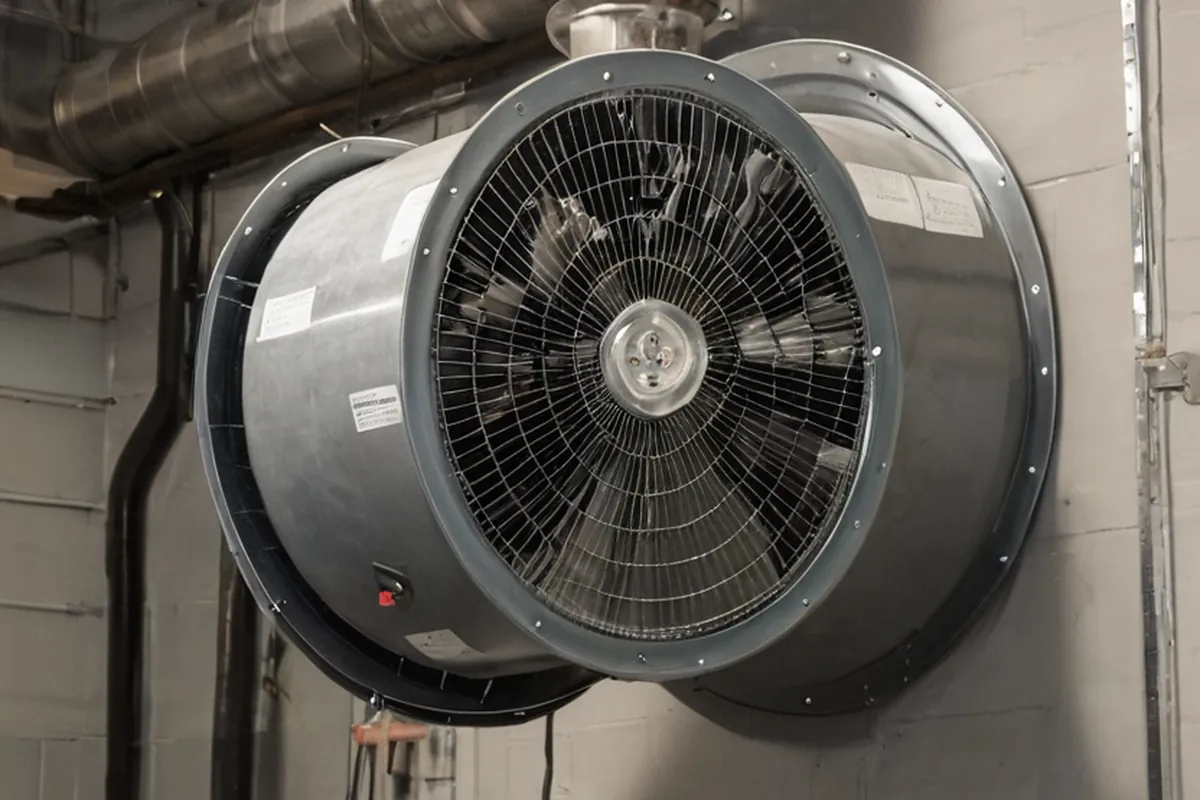
Laser fume is fine particulate plus whatever your material gives off when it burns. It needs to leave the building, not the bench. This is the part new owners most often get wrong, and the one with real health consequences.
Check your job time →1. Sealed enclosure, active fan, ducted outside
That is the whole formula. The enclosure keeps fume in one place, the fan creates enough negative pressure to pull it out, and the duct takes it outside. A room fan pointed at an open door does none of these - it dilutes fume into the room you are standing in and pushes some of it back at you. If you can smell the job from across the room, extraction is not working.
2. Sizing the fan
Manufacturers quote free-air ratings that the fan will never achieve once it is pulling through an enclosure and a duct run. Assume real-world throughput is well below the sticker figure and buy accordingly. A useful rule of thumb: you want a visible, steady draw at the enclosure inlet, and no smoke escaping the seams when the lid is closed. If smoke leaks out of the lid gap, the fan is not keeping up.
3. Ducting mistakes that halve your airflow
- Long flexible duct. Corrugated hose has far more resistance than smooth pipe. Keep runs short and use rigid pipe where you can.
- Bends. Every sharp elbow costs you. Sweep them wide.
- Crushed or sagging hose. A kink behind the bench undoes an expensive fan.
- Restrictive outlet. A fine mesh or a nearly-closed window vent chokes the whole system.
4. Filters instead of a window
If you genuinely cannot vent outside, a proper filter unit with a particulate stage and an activated-carbon stage is the alternative - not a desk air purifier. The catch is running cost: carbon saturates and stops adsorbing long before it looks used, and a saturated filter passes fume straight through while sounding exactly the same. Budget for replacements as a consumable, and change them on schedule rather than on smell.
5. Material matters more than the fan
No extractor makes PVC acceptable - the chlorine gas corrodes your machine from the inside and is genuinely dangerous to breathe. Chrome-tanned leather and unidentified plastics belong in the same category. Extraction handles the fume from materials that are safe to cut; it is not a licence to cut unsafe ones.
Rule of thumb: If you run the machine in the same room you sit in, extraction is not a nice-to-have. Seal it, vent it outside, and keep the duct short and straight.
Open the calculator →FAQ
Is an open window enough for laser fumes?
No. Passive venting does not create the negative pressure needed to pull fume out of the enclosure, so it circulates through the room first. You need a sealed enclosure with an active fan ducted outside.
How big a fan do I need for a laser cutter?
Bigger than the free-air rating suggests, because ducting and the enclosure cut real throughput significantly. The practical test is that no smoke escapes the lid seams while the job runs.
Can I use a filter instead of venting outside?
Yes, if it is a proper unit with particulate and activated-carbon stages. Treat the carbon as a consumable - it saturates invisibly and then passes fume through while seeming to work normally.
Does extraction make any material safe to cut?
No. PVC, vinyl, chrome-tanned leather and unidentified plastics stay off the list regardless of extraction. Chlorine-containing materials corrode the machine and are hazardous to breathe.